
Odor Removal vs. Masking: What Actually Works
Odor removal vs. masking: masking versus molecular removal, ozone and hydroxyl versus sprays, durability of results, and cost versus benefit.
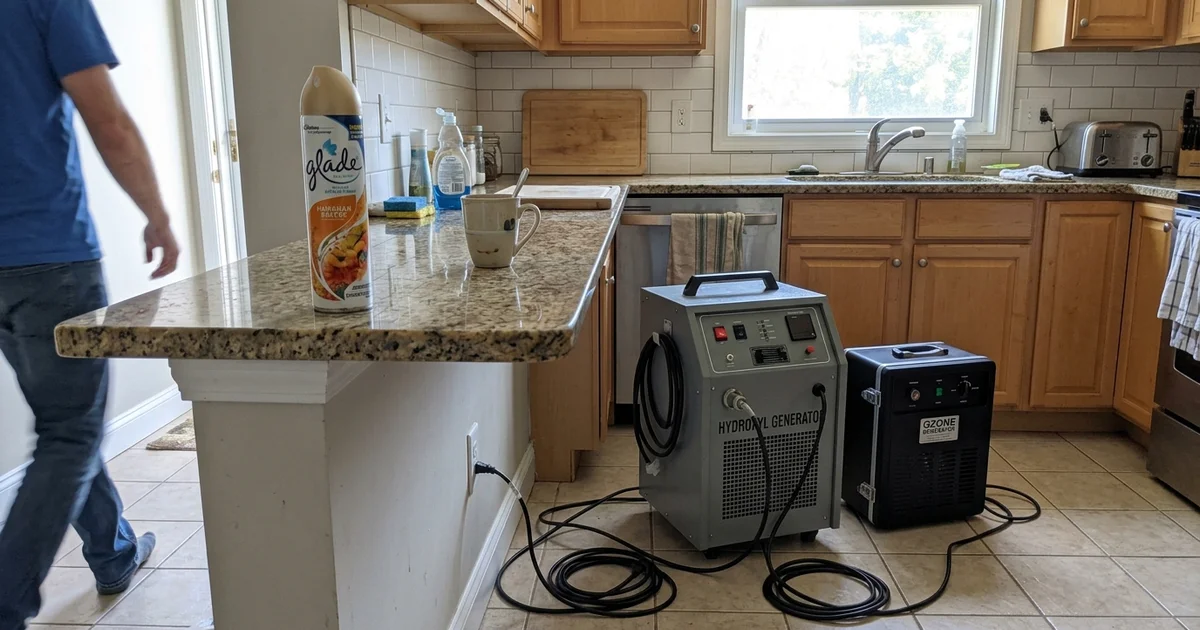
You know how frustrating it is to scrub a room from top to bottom, only to have the same heavy smell return the next day. Our professional odor removal experts see this struggle daily, especially when helping clients manage the realities of severe clutter and hoarding recovery.
For the estimated 14 million people in the US dealing with hoarding disorder, a home can quickly become an overwhelming environment. The dividing line between success and failure is understanding the difference between covering up a problem and actually solving it.
Let’s look at the science of odor removal vs masking, what the data actually tells us, and explore a few practical ways to respond.
The Distinction That Explains Everything
Masking adds a new smell to the environment. Removal eliminates one.
Every product and service falls on one side of this line, and knowing which side tells you exactly what result to expect.
A scented spray, plug-in, or candle introduces a fragrance strong enough to compete with the bad air for a few hours. The US Environmental Protection Agency (EPA) notes that many commercial air fresheners release volatile organic compounds (VOCs) into the air.
Nothing has changed in the material producing the original smell.
The Science of Molecular Odor Removal
Molecular odor removal destroys the odor compound itself through aggressive oxidation or breaks it down chemically.
Our crews rely on this method because it guarantees permanent results.
When the biological source has been dealt with first, the smell simply does not return. We do not use masking agents at any stage of the process.
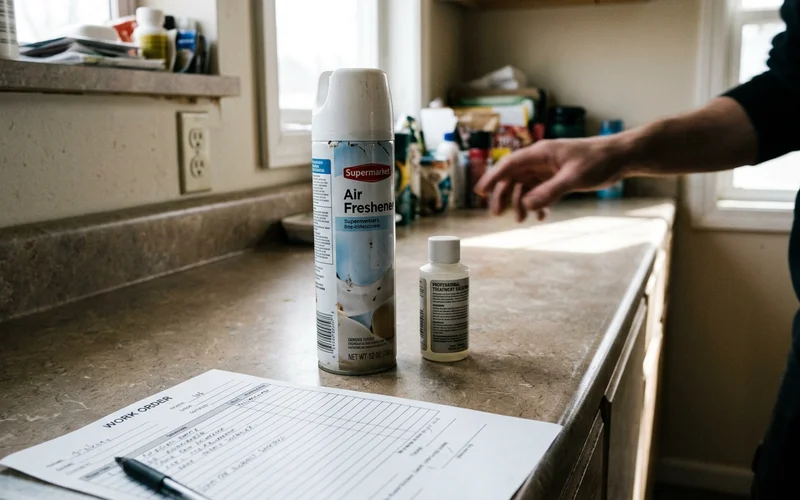
How the Options Compare
Comparing these tools side-by-side reveals exactly why some treatments last hours and others last forever.
When comparing ozone vs air freshener, the difference is a literal chemical change versus a temporary perfume.
| Approach | What it does | How long it lasts | Best for |
|---|---|---|---|
| Sprays, candles, plug-ins | Adds competing fragrance | Hours | Cooking smells, short-term freshening |
| Baking soda, charcoal, absorbers | Absorbs small amounts from the air | Days to weeks, mild odors only | Fridges, closets, drawers |
| Consumer ozone machine | Oxidizes odor molecules in air | Days if source remains | Finishing a space you have already cleared |
| Professional thermal fogging | Penetrates porous materials the way smoke did | Durable with source removal | Smoke and fire odor |
| Professional hydroxyl treatment | Breaks down molecules, safe in occupied spaces | Durable with source removal | Occupied homes, ongoing treatment |
| Professional ozone treatment | Aggressive oxidation, vacant spaces only | Durable with source removal | Severe odor in vacant properties |
| Source removal and sealing | Eliminates the reservoir entirely | Permanent | Any odor that keeps returning |
Why Professional Treatment Fails When It Fails
It is almost always the same reason for failure. Somebody skipped the source.
Ozone applied to a room with a urine-saturated subfloor clears the air beautifully for a brief window. Two days later, the reservoir has refilled the room with the exact same stench.
The equipment worked exactly as designed, but the result was still entirely wrong.
The Subfloor Trap
Dried urine forms uric acid crystals that do not dissolve with standard cleaning.
Warm weather and high summer humidity reactivate these dormant crystals, releasing ammonia gas directly into the room.
Our teams see this constantly in hoarding cleanups across the US, where well-meaning efforts treat the carpet but ignore the structural wood underneath.
This is also why a company that quotes an ozone treatment without assessing materials is quoting a temporary result, whether they admit it or not. If you are being offered a treatment with no mention of what is being removed or sealed, ask the question directly.
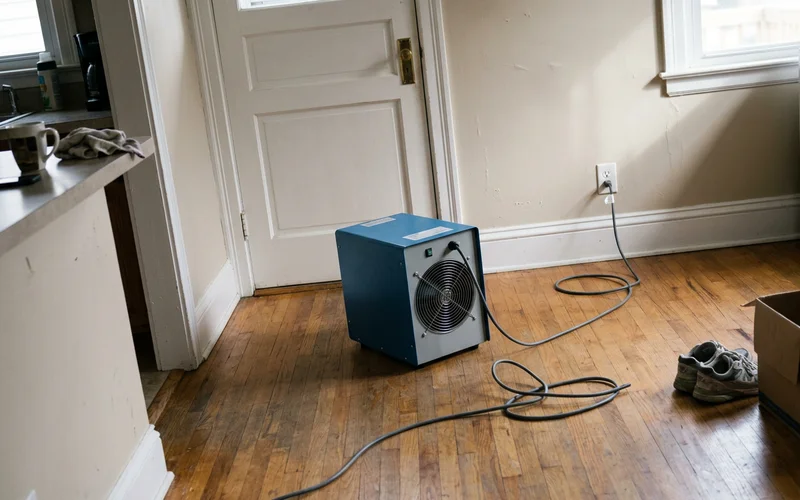
Ozone Versus Hydroxyl
Ozone oxidation is incredibly fast and aggressive.
It requires the treated space to be completely unoccupied by people, pets, and plants during the cycle, with a strict ventilation period before reentry.
The US Food and Drug Administration (FDA) strictly limits indoor ozone output because it can heavily irritate the respiratory system. For a vacant rental property, that ventilation constraint is no problem at all.
Choosing the Right Technology
Hydroxyl generators work much more slowly but are completely safe to operate in occupied spaces.
Our technicians often deploy these units for families still living in the property while one specific area is treated.
That difference in safety and convenience is decisive for an overwhelmed household.
Neither tool is universally better than the other. We choose based on property vacancy, the severity of the biohazard, and how quickly you need the home back.
The Cost-Benefit Question
For a landlord or property manager, the math is usually very simple. A smoke or odor-damaged unit either sits empty for months or rents far below fair market value.
A professional treatment in the $1,500 to $8,000 range is a clear bargain compared to the cost of repeated vacancies. Rapid turnarounds can fully restore a property’s market value in as little as 48 hours.
Preserving Property Value
For a home seller, potential buyers will walk out over a bad smell faster than almost any other issue.
The National Association of Realtors (NAR) reports that strong odors, like lingering tobacco smoke, can reduce a property’s resale value by up to 29 percent.
Odor removal remains one of the cheapest problems to fix relative to its massive effect on final offers. For a homeowner with a mild issue and a source you can easily identify and remove yourself, save your money.
We will gladly tell you that on the phone and point you toward a DIY fix.
Where to Start
Work out whether you have a localized source problem or a general air problem.
Our comprehensive guide on Why odors keep coming back covers the usual hiding places and exactly how to check them safely.
Sometimes, the issue is isolated to a single hidden pet stain or a forgotten trash bag. If the answer turns out to be a massive reservoir trapped within the building materials themselves, no amount of consumer product will ever reach it.
The good news is that the assessment to confirm that structural issue is free. You do not have to tackle this heavy burden all by yourself, so call a professional to schedule an inspection today.
Frequently Asked Questions
Is ozone better than air fresheners?
Will the results last?
Is professional odor removal worth the cost?
Can I rent an ozone machine and do it myself?
Related Guides
How Professional Cigarette Smoke Odor Removal Works
How professional cigarette smoke odor removal works: nicotine and tar residue, source removal, sealing, thermal fogging, ozone, and HVAC considerations.
Why Household Odors Keep Coming Back
Why bad household odors keep returning: absorbed odors in porous materials, hidden sources, why air fresheners fail, and when to call a professional.
Learn more about Odor & Smoke Removal
If this guide described your situation, our odor removal service page walks through the full process, pricing, and what happens after you call.