
When a Property Needs Professional Disinfection
When to hire professional disinfection: disease exposure, contamination events, commercial and tenant turnover, and why hospital-grade disinfectants matter.
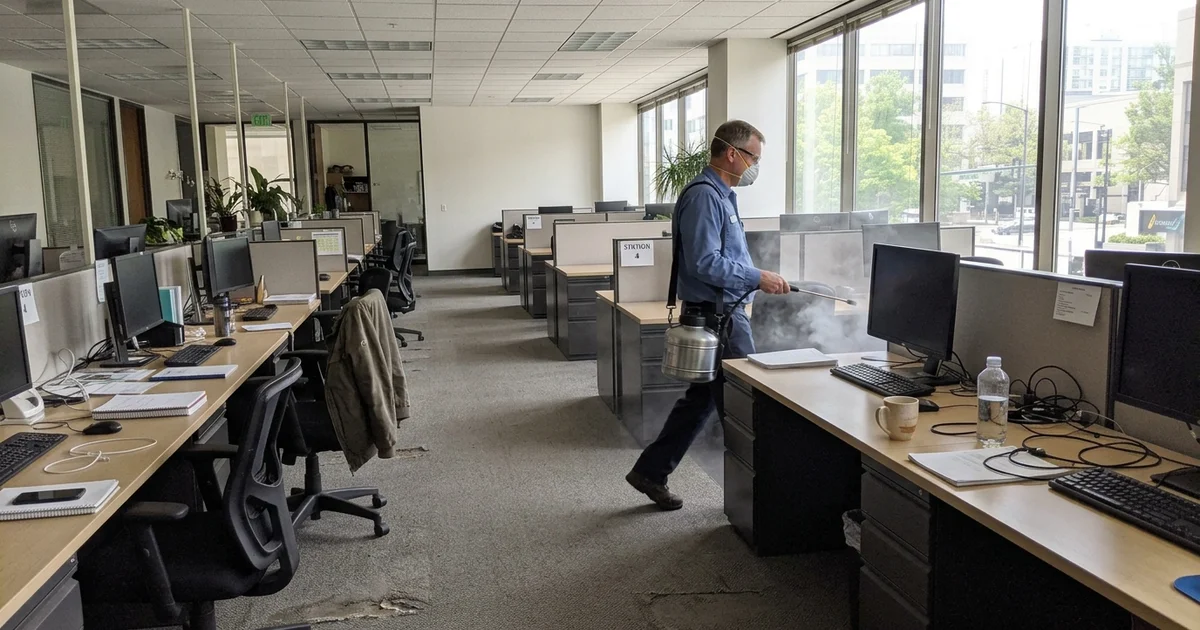
As a professional service team, we know how overwhelming it feels to stand in a space filled with years of accumulated items and wonder exactly when to hire professional disinfection service experts to make it safe again.
Often, the biggest hurdle for families dealing with hoarding disorder is not just the physical clutter. The real hidden danger is the biological risk left behind, which is why infection control and disinfection requires a highly specialized approach. Store-bought sprays simply cannot handle the severe contamination found in these environments.
Our technicians have guided countless families through this exact crisis. A 2024 U.S. Senate Committee on Aging report estimates that up to 14 million Americans face these challenges, proving this is a widespread health issue. We invite you to look at the data, what the science of sanitation actually requires, and outline the professional disinfection triggers that signal it is time for a clear plan to restore your property safely.
Cleaning and Disinfection Are Not the Same Thing
This distinction gets blurred constantly. Cleaning merely removes visible soil, while true disinfection kills microscopic pathogens.
Our technicians frequently explain that wiping a surface immediately after spraying does absolutely nothing to kill bacteria. Disinfection only works if the chemical stays wet for the full contact time listed on the product label.
The Importance of Chemical Dwell Times
We constantly remind clients that this necessary dwell time usually takes several minutes to achieve a safe result. The Environmental Protection Agency maintains List N, a registry of products proven to destroy severe pathogens. Many of these hospital-grade chemicals require a continuous wet contact time of 5 to 10 minutes to be effective.
| Action | Purpose | Average Dwell Time | Result |
|---|---|---|---|
| Ordinary Cleaning | Removes dirt and visible soil | Immediate wipe | Leaves microscopic pathogens behind |
| Professional Disinfection | Destroys harmful biological threats | 5 to 10 minutes | Eliminates invisible health risks |
Our specialized protocols use these specific products to ensure every pathogen is destroyed. A typical cleaner spraying and wiping in one rapid motion has cleaned a surface, but they have done very little to disinfect it. The product was wiped away before it had time to act.
We know this is not carelessness. It is simply what ordinary cleaning looks like.
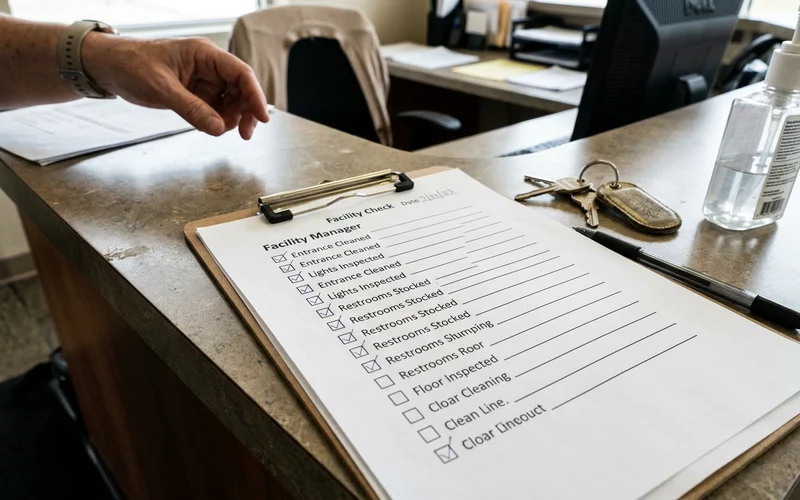
Trigger 1: Disease Exposure or Outbreak - When to Hire Professional Disinfection Service
A confirmed illness in a severely cluttered residential space creates an actual transmission risk. Professional treatment addresses this immediately by producing a documented, scientific result you can point to, rather than a vague assurance that the place was cleaned.
Our approach helps families who are clearing out a hoarded home and remain particularly vulnerable to lingering pathogens. These environments often harbor multiple biological threats that require targeted action.
- Norovirus: Survives for weeks on hard surfaces and spreads rapidly without proper chemicals.
- E. coli: Often linked to rotting food or animal waste hidden under piles of clutter.
- Staph and MRSA: Thrives in unsanitary, cramped conditions where manual cleaning is nearly impossible.
- Hantavirus: Spread via rodent droppings common in long-term hoarding situations.
We utilize hospital-grade fogging equipment to reach the hidden areas that manual wiping completely misses. The Centers for Disease Control and Prevention (CDC) notes that viruses like Norovirus can easily survive on hard surfaces for days if not properly sanitized.
Our technicians frequently encounter Norovirus in hoarding settings because it stubbornly resists many ordinary household cleaners. Proper intervention stops the cycle of illness in its tracks.
Trigger 2: Contamination Events
Sewage backups, biological material, and animal hoarding leave behind hazardous contamination that ordinary cleaning cannot safely address. These severe situations demand strict containment and specialized hazardous material handling before disinfection begins.
We always warn families that sending a standard janitorial crew into a Category 3 water loss puts everyone at severe risk. The Institute of Inspection, Cleaning and Restoration Certification (IICRC) S500 standard clearly defines Category 3 water as grossly contaminated. This extreme category includes raw sewage, animal feces, and heavy biological decay.
“The IICRC S500 standard strictly categorizes raw sewage and heavy biological decay as grossly contaminated black water, requiring immediate professional containment.”
Our remediation process strictly follows these IICRC guidelines to protect your family from dangerous biohazards. Exposure to this level of contamination can cause severe illness or adverse health reactions. Attempting to clean these spills without professional respiratory protection is incredibly dangerous.
We bring in specialized extraction equipment to safely remove the hazardous material first. Only after the source is entirely removed can the actual disinfection phase begin.
Trigger 3: Tenant Turnover and Property Handover
When a previous occupant suffered from severe hoarding, standard turnover cleaning is never sufficient. The extreme conditions leave massive uncertainty about the unit, making professional sanitation necessary for legal and health reasons.
Our team sees this scenario come up constantly for property managers and overwhelmed families handling an estate. The practical driver for hiring a professional is often legal liability rather than just immediate health concerns. A standard deep clean offers no legal protection if someone falls ill after moving into a previously contaminated property.
Protecting Your Liability During Handovers
We provide a fully documented treatment record to protect you if a new tenant or buyer raises a health question six months later. Proper commercial disinfection provides a verifiable chain of custody for the entire sanitation process. Real estate laws across the US often require full disclosure of biohazards, making professional certification a crucial asset during a sale.
Our detailed reporting ensures you have concrete proof of a safe environment. Every inch of the property must meet strict habitability standards before you hand over the keys.
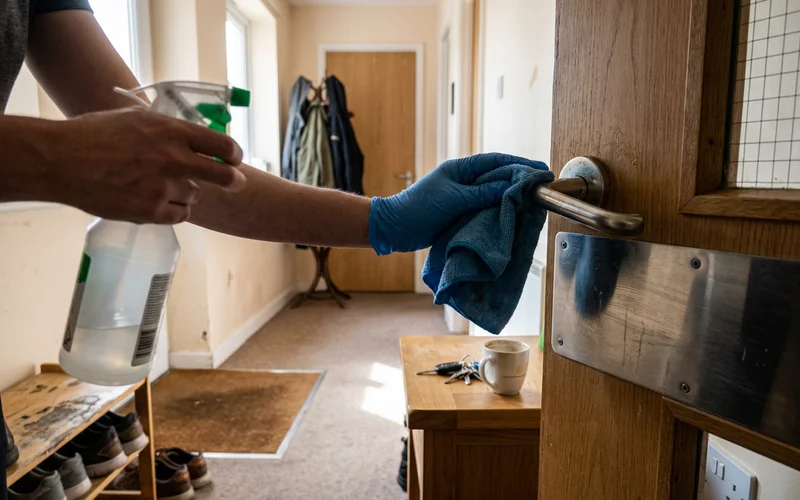
Trigger 4: You Need Documentation
Sometimes a hoarded property appears fine after a cleanout, but you actually need undeniable proof of safety. Adenosine Triphosphate (ATP) testing provides this verification by measuring the exact amount of organic matter left on a surface.
We know that simply saying a space was cleaned is not an acceptable answer that settles anything with insurers or regulators. The scientific results of ATP testing are displayed in Relative Light Units (RLU).
- Satisfies Insurance Requirements: Provides the hard numbers adjusters need to approve property claims.
- Protects Future Liability: Creates a permanent record of sanitary conditions before a sale.
- Guarantees Family Safety: Proves that invisible pathogens are completely gone.
Our technicians utilize this advanced post-remediation verification to produce a numeric result rather than an empty assurance. Industry standards dictate that a truly safe, non-critical surface should score under 100 RLU.
We measure these levels in real-time to guarantee the biological hazards are completely eradicated. If any area fails the test, it is immediately treated again until it passes.
Why Hospital-Grade Products and Verification Matter
EPA-registered hospital-grade disinfectants are rigorously tested against specific dangerous pathogens at precise concentrations. Using the right product at the wrong contact time produces the exact same failure as using the completely wrong product.
We prioritize scientific verification because it completely closes the loop on safety. Rather than just hoping a chemical treatment worked, measuring residual organic material on treated surfaces reveals the absolute truth. Anything that fails the ATP test must be immediately retreated.
Our rigorous verification process ensures that families can finally breathe easy in their renewed space. You get the exact RLU readings for your permanent records.
“Verification closes the loop. Rather than assuming the treatment worked, precise measurement ensures complete safety and peace of mind for the next occupant.”
What It Costs and How It Is Scheduled
Most standard commercial disinfection projects run between $1,000 and $8,000 in the US. This price depends heavily on total square footage, the specific contamination level, and whether verification testing is included.
Our pricing for recurring schedules on commercial properties is handled separately. Resolving a severe hoarding situation often requires custom scoping due to the extreme biohazard risks involved.
- Total Square Footage: Larger hoarded properties require extended chemical treatment times.
- Contamination Level: High biohazard presence increases specialized labor needs.
- Verification Testing: Including ATP testing adds scientific proof of structural safety.
We structure our entire workflow to minimize disruption to your daily life. Taking that first step to clear a property requires immense courage, which is the most important factor in knowing when to hire professional disinfection service teams.
We invite you to Request an assessment and our team will scope the entire project around your specific schedule and needs.
Frequently Asked Questions
When do I need professional disinfection?
What disinfectants do you use?
How long does the space need to stay empty?
How do I prove the property was treated?
Learn more about Infection Control & Disinfection
If this guide described your situation, our infection control service page walks through the full process, pricing, and what happens after you call.