
When Does Clutter Become a Biohazard?
Learn the health and safety line between clutter and a biohazard, from mold and feces to pests and structural risks, and when professional help is needed.
The Line Is Not About How Much Stuff There Is
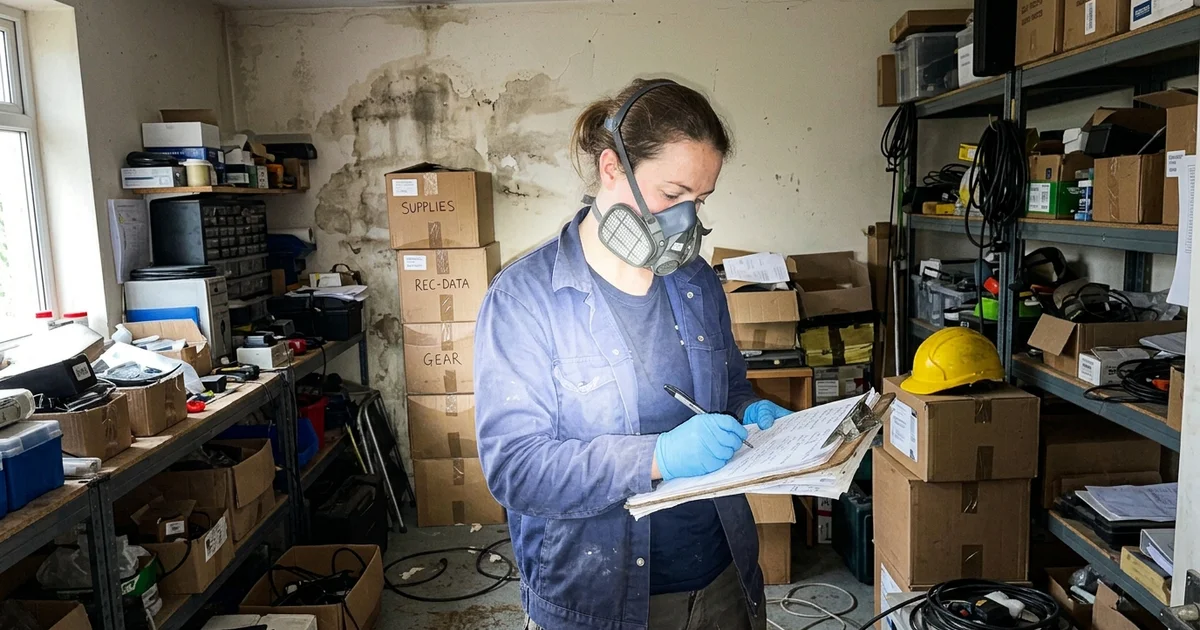
We know from experience that figuring out exactly what makes a cluttered house dangerous is highly stressful. Families often ask us when does hoarding become a biohazard, assuming the trigger for professional help is simply volume. Volume is actually just a logistics issue, while contamination defines a true emergency.
Our perspective changes completely when biological risks enter the picture, and it is the distinction our Cincinnati hoarding cleanup and biohazard remediation team uses to scope every job.
Recent 2025 meta-analysis data shows that hoarding disorder affects roughly 2.5 percent of US adults, meaning nearly 15 million Americans face these exact challenges. We categorize a biohazard as any biological material capable of transmitting disease or causing severe harm. Regulated cleanup protocols trigger immediately upon discovering any of these severe contaminants:
- Accumulated human or animal waste
- Blood or infectious bodily fluids
- Active decomposition materials
- Category 3 raw sewage backups
- Severe and persistent indoor mold growth
Disposal of these dangerous elements must always happen through a regulated waste stream instead of a standard residential dumpster. We provide a specialized biohazard and trauma cleanup service that covers this precise scope, including full decontamination and verification testing.
Let us review the specific warning signs and explore practical ways to respond to them safely.
The Five Signs That Move a Home Across the Line
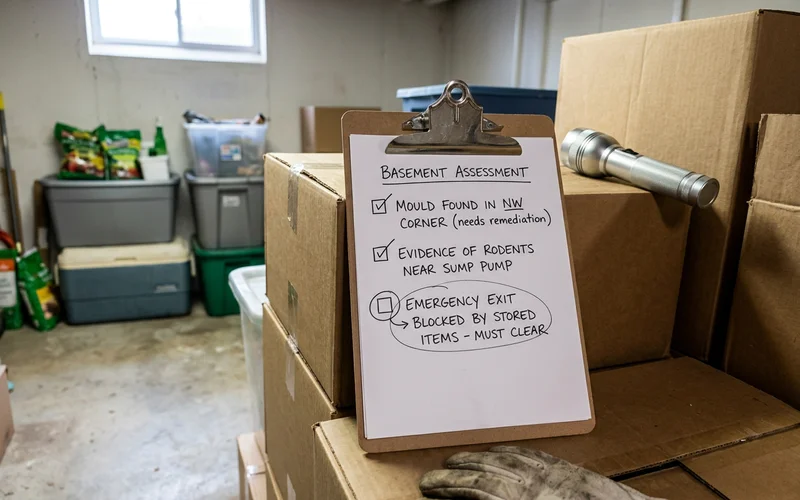
We classify a home as a biohazard zone the moment one of five specific contamination markers appears. These five signs include severe mold, biological waste, pest infestations, decayed food, and sewage failures. Our technicians see these issues frequently, and each requires a specialized response plan to protect the occupants.
Mold and persistent moisture
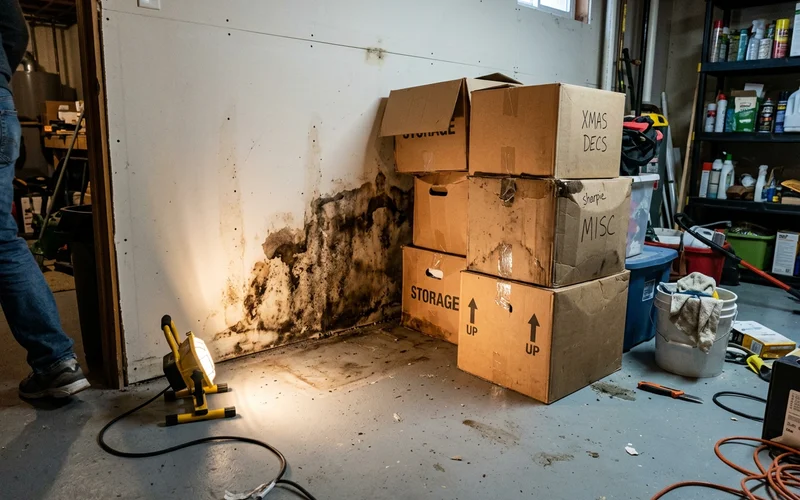
We find that stacked material traps moisture against walls and floors, creating a breeding ground for mold. A slow leak in a basement provides the perfect environment for rapid fungal growth. Our primary concern is not just the visible patch of mold on the drywall. The hidden danger is the massive spore load released into the air when the pile is finally moved.
We always build physical containment barriers first and disturb the material second. This approach prevents hazardous spores from spreading to clean areas of the house. Our team relies on guidelines from the US Environmental Protection Agency, which states that mold can begin growing on damp surfaces within 24 to 48 hours. Quick intervention is essential to prevent structural rot.
Human or animal waste
We treat accumulated feces and urine as a serious pathogen risk. Concentrated urine continuously releases ammonia gas into the air. Our safety monitors regularly detect dangerous ammonia levels in enclosed spaces like attics and crawlspaces. The Occupational Safety and Health Administration (OSHA) sets the permissible exposure limit for ammonia at 50 parts per million (ppm) for workers.
Levels above 300 ppm are immediately dangerous to life and health. We require our crews to follow strict respiratory protocols:
- Wear full-face respirators equipped with ammonia-specific cartridges.
- Ventilate the space using negative air machines before entering.
- Apply specialized enzymatic cleaners to neutralize chemical residues.
Pest and rodent infestation
We encounter disease-carrying droppings, nesting materials, and carcasses in many heavily cluttered homes. Dried rodent droppings are particularly hazardous because they aerosolize easily when someone steps on them or sweeps the floor. Our safety protocols treat aerosolized particles as the primary transmission route for hantavirus pulmonary syndrome, a severe respiratory disease found across the US.
The Centers for Disease Control and Prevention strongly advises against vacuuming or sweeping dry rodent waste. We saturate the affected areas with an EPA-registered hospital-grade disinfectant before attempting any removal. This simple wet-cleaning technique prevents infectious dust from becoming airborne.
Spoiled food and sanitation failure
We often discover severe bacterial contamination in kitchens that have been out of service for extended periods. A refrigerator that lost power or food stored in unsealed containers for years creates a toxic environment well beyond the visible mess. Our crews routinely encounter dangerous pathogens like Salmonella and E. coli in these exact conditions.
“Standard household cleaners cannot penetrate or neutralize the thick bacterial biofilms found in deeply hoarded kitchens.”
You cannot simply wipe down these surfaces with a standard household sponge. We apply commercial sanitizers that require a specific dwell time on the surface to achieve a complete microbial kill. Replacing deeply contaminated porous surfaces, like wooden cabinets or laminate countertops, is usually the safest option.
Sewage and plumbing failure
We categorize any sewage backup as a biohazard without exception. The Institute of Inspection, Cleaning and Restoration Certification (IICRC) S500 standard classifies raw sewage as Category 3 blackwater. Our technicians treat Category 3 water as grossly contaminated because it contains pathogenic, toxigenic, or other harmful agents. In a hoarded home, a plumbing failure often goes unnoticed for weeks because the affected area is buried beneath layers of belongings.
We must remove and discard all porous materials that touch Category 3 water, including carpet, carpet pad, and drywall. Proper remediation requires extensive structural drying and independent clearance testing to ensure the home is safe for habitation.
Structural Risk and Blocked Egress
We evaluate structural damage and egress paths as critical safety thresholds that often outrank a basic clutter health hazard. Blocked exits mean a person cannot escape a crisis, and first responders cannot enter the building to execute a rescue. Our teams frequently see structural risks compound when heavy, saturated items compromise the floor joists.
We look for specific warning signs of structural failure during our initial walk-through. Floors that flex, ceilings showing heavy staining, and interior doors that no longer close square indicate that the building framework is failing. The immense weight of water-logged belongings easily exceeds the standard load-bearing capacity of a typical US residential floor structure.
Our safety experts recommend focusing on these immediate egress and fire priorities before tackling the broader mess:
- Clear a primary exit path that is at least 36 inches wide.
- Remove all combustible items within a three-foot radius of any heating appliance.
- Test and install fresh batteries in all smoke detectors.
- Ensure that every bedroom has at least one accessible window for emergency escape.
We always conduct a strict review of immediate fire hazards when entering a property. Stored material stacked directly against a furnace or space heater creates a highly combustible environment. Recent National Fire Protection Association (NFPA) statistics indicate that fires in hoarded properties can spread up to three times faster than in standard homes due to the immense fuel load. Fire departments across the US flag known hoarded properties as elevated-risk addresses to protect their crews.
Health-Code Exposure
We often help families manage the stressful process of resolving a municipal health or building code violation. Local departments issue these formal notices for raw sewage accumulation, extreme vermin infestation, or other unsafe hoarding conditions. Our experience shows that ignoring these citations quickly leads to a property being formally condemned as unfit for human occupancy.
Many US municipalities enforce these standards using the International Property Maintenance Code (IPMC). The IPMC mandates strict sanitation standards, and failing to meet them gives the city legal authority to force an eviction.
| Code Violation Type | Common Hoarding Trigger | Typical Municipal Action |
|---|---|---|
| Sanitation Failure | Accumulated garbage and biological waste | 30-day notice to clean and sanitize |
| Pest Infestation | Widespread rodent or insect breeding | Mandatory professional extermination |
| Utility Disconnection | Lack of running water or electricity | Immediate unsafe occupancy declaration |
| Egress Blockage | Blocked doors, windows, or hallways | Immediate fire code citation |
We want to emphasize that most of these intimidating notices are entirely resolvable. Documented, professional remediation is the standard requirement to lift a condemnation order and satisfy the local health inspector. Our crews provide comprehensive before-and-after photographic documentation and post-remediation verification for this exact purpose. Property owners desperately need this verified record to prove that the environmental hazards have been neutralized.
When to Stop Assessing and Call
We encourage families to seek help long before a clutter issue escalates into an unmanageable crisis. You do not need absolute certainty to pick up the phone and ask a professional for advice. Our support team is ready to listen if you notice any of the warning signs mentioned above, or if you simply cannot identify a strange odor in the home.
“Early intervention is the safest and most effective way to address severe property contamination.”
Clinical frameworks exist to help evaluate these environments accurately. If you want to understand how severity is formally categorized, the 5 levels of hoarding gives you the exact framework that industry professionals use.
Our initial assessments cost nothing.
Honest guidance is a core value, and we will tell you plainly if the situation can be handled without specialized intervention. Contact our office today to schedule a free evaluation and take the first step to restore a safe living space.
Frequently Asked Questions
Is mold in a hoarded home dangerous?
Can a hoarded home be condemned in Ohio?
Does animal waste always count as a biohazard?
How do I know if it is bad enough to call someone?
Related Guides
Does Homeowners Insurance Cover Hoarding Cleanup in Ohio?
How homeowners, auto, and commercial insurance can cover hoarding and biohazard cleanup in Ohio, plus programs covering up to $1,000 and claim help.
How to Help a Hoarding Parent or Loved One
A trauma-informed guide to helping a hoarding loved one without shame or conflict, covering how to approach, when to involve professionals, and respecting autonomy.
Recovering Valuables and Important Documents During a Cleanout
How we search for and recover cash, jewelry, documents, and keepsakes during a cleanout, categorized and returned to you, never blind junk removal.
The 5 Levels of Hoarding Explained
Understand the 5 levels of the Clutter-Hoarding Scale, what each level looks like, safety thresholds, and when to seek professional help.
Talk it through with someone
There is no charge to ask a question, and no pressure attached to the answer. The helpline is answered 24 hours a day, every day of the year.